
Discover the transformative power of hair tattoos at JC Hair Ink in Glasgow. Our state-of-the-art scalp micropigmentation techniques offer a cutting-edge solution to hair loss, appealing to both men and women seeking a fuller hair appearance.
The Art of Hair Tattooing
Hair tattooing, professionally known as Scalp Micropigmentation , is a non-invasive procedure where natural pigments are applied at the epidermal level of the scalp. This process creates the appearance of tiny hair follicles, offering a realistic and subtle solution to hair thinning and baldness.
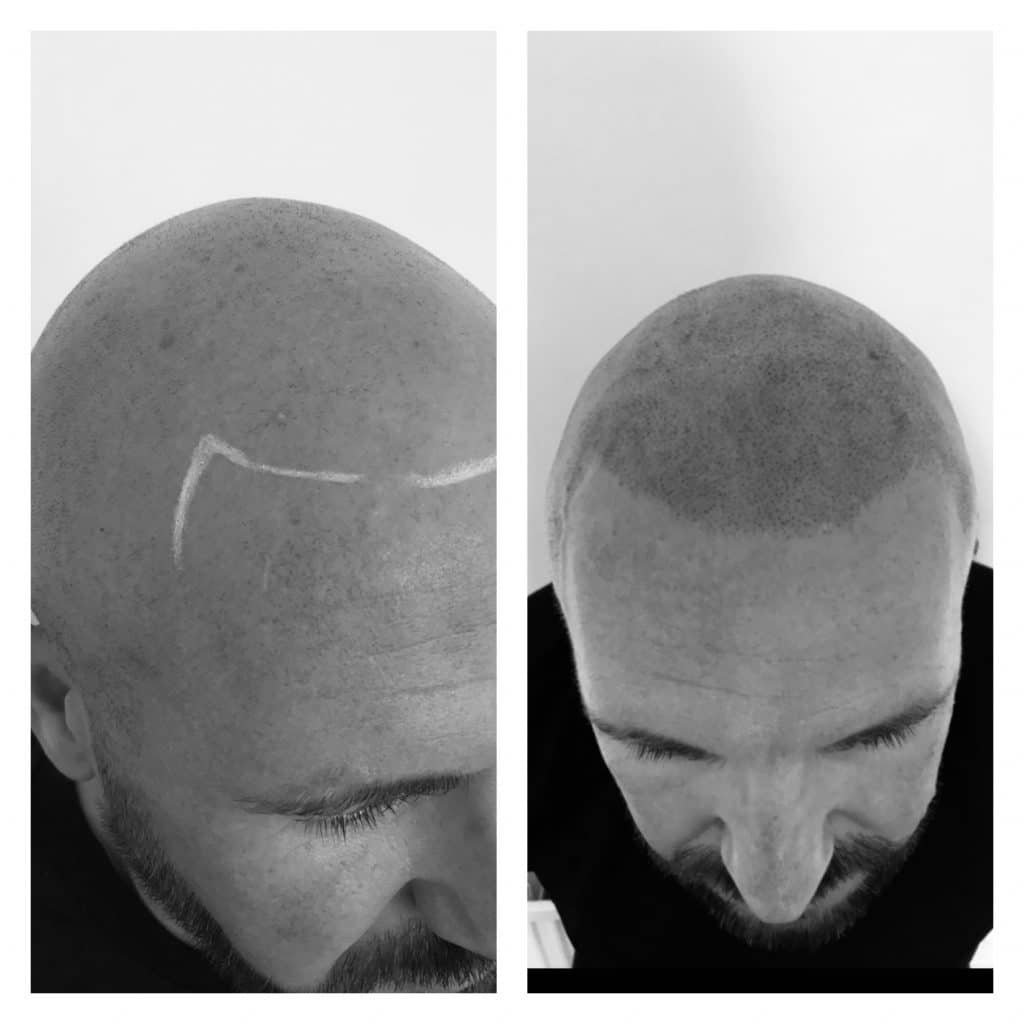
Tailored Hair Tattoo Solutions for Every Individual
At JC Hair Ink, we understand that each client has unique needs. Our bespoke hair tattoo services are designed to suit different hair loss patterns, skin types, and personal preferences, ensuring a natural and seamless result.
Why Choose JC Hair Ink for Your Hair Tattoo in Glasgow?
JC Hair Ink is not just a provider of hair tattoo services; we are artists and innovators in the field. Our team of skilled professionals is passionate about delivering excellence and precision in every treatment. We use the latest equipment and high-grade pigments to ensure optimal results.
Hair Tattoo FAQ’s
FAQ's
How does hair tattooing compare to other hair restoration methods?
1. Non-Surgical Procedure:
- SMP: It’s a completely non-invasive procedure involving the application of pigment to the scalp to create the appearance of hair follicles.
- Other Methods: Many hair restoration techniques, like hair transplants, are surgical, involving grafting hair follicles from one part of the scalp to another.
2. Immediate Results:
- SMP: Results are visible immediately after the first session, with the full effect achieved in a few sessions.
- Other Methods: Surgical procedures often require a significant healing period before the final results are visible, sometimes taking months.
3. Maintenance and Durability:
- SMP: Requires minimal maintenance. Touch-ups may be needed every few years to maintain color and definition.
- Other Methods: Hair transplants are permanent, but may require additional procedures if hair loss continues. Non-surgical methods like hair systems require ongoing maintenance.
4. Pain and Recovery:
- SMP: Generally involves minimal discomfort and has a very short recovery time.
- Other Methods: Surgical options can involve more significant pain and require a longer recovery period.
5. Cost:
- SMP: Often more cost-effective than surgical options, with pricing based on the extent of the area to be covered.
- Other Methods: Surgical methods like hair transplants can be quite expensive, and ongoing costs for non-surgical methods can add up over time.
6. Appearance:
- SMP: Creates the look of a shaved or short buzz-cut style. It can also add density to thinning hair.
- Other Methods: Hair transplants and other restoration methods aim to regrow or replace lost hair, potentially offering a more traditional hair appearance.
7. Suitability for Different Hair Loss Types:
- SMP: Effective for a wide range of hair loss patterns, including receding hairlines, thinning hair, baldness, and scarring.
- Other Methods: Some methods, like transplants, require a good donor area and may not be suitable for all types of hair loss.
8. Risk and Side Effects:
- SMP: Lower risk of complications compared to surgical methods. Side effects are usually minor, like temporary redness.
- Other Methods: Surgical techniques carry risks like infection, scarring, and inconsistent results.
What Can I Expect During the SMP Process?
-
Consultation: The SMP process begins with a detailed consultation. Here, you’ll discuss your goals, hair loss pattern, and desired look. It’s an opportunity to address any concerns or questions you may have.
-
Design and Planning: Based on your consultation, the practitioner will design a hairline and choose pigment shades that match your natural hair and skin tone. This step is crucial for achieving a realistic and satisfying outcome.
-
Application Sessions: SMP typically requires multiple sessions, each lasting a few hours. During these sessions, a microneedle is used to deposit pigment into the scalp. The first session lays the foundation, while subsequent sessions add density and detail.
-
Healing and Aftercare: After each session, there will be a short healing period. You’ll be advised to keep your scalp dry and avoid certain activities for a few days to ensure optimal pigment retention and healing.
-
Final Touch-up: A final session may be scheduled to make any necessary adjustments, ensuring a natural and uniform appearance.
How Do We Ensure a Match with Your Natural Hair Color and Style?
-
Custom Pigment Blending: Practitioners use a range of pigment colors which are blended to match your natural hair color closely. This custom blending is key to ensuring the SMP looks natural.
-
Hairline Design: The design of the hairline is tailored to your facial structure, age, and personal preferences, ensuring it complements your natural style.
-
Density Matching: The practitioner carefully replicates the density of your natural hair. This involves layering the pigment in a way that mimics the varied density of a natural hairline.
-
Artistic Technique: The skill of the practitioner in mimicking natural hair follicles and patterns plays a significant role. Experienced practitioners can create a look that seamlessly blends with your existing hair.
What Are the Care Instructions Following a Hair Tattoo Session?
-
Keep the Scalp Dry: Avoid washing your scalp or engaging in activities that cause sweating for at least 4-5 days after each session.
-
Avoid Sun Exposure: Protect the treated area from direct sunlight for a few weeks to prevent fading and aid in healing. Use a hat or sunscreen if you need to be outdoors.
-
No Swimming or Saunas: Stay away from swimming pools, saunas, and steam rooms for about a week after treatment.
-
Gentle Washing: When you do start washing your scalp, use gentle, fragrance-free products.
-
Avoid Shaving: Wait a few days before shaving your head to allow the area to heal properly.
-
Moisturize: Once the initial healing period is over, keep your scalp moisturized to maintain the appearance of the SMP.
-
Follow-Up Care: Adhere to any specific aftercare instructions provided by your SMP practitioner, including scheduling follow-up sessions if needed.
What is the post-treatment care required?
Post-treatment care involves keeping the scalp dry for a few days, avoiding heavy exercise, and applying recommended moisturizers.

Are you ready?
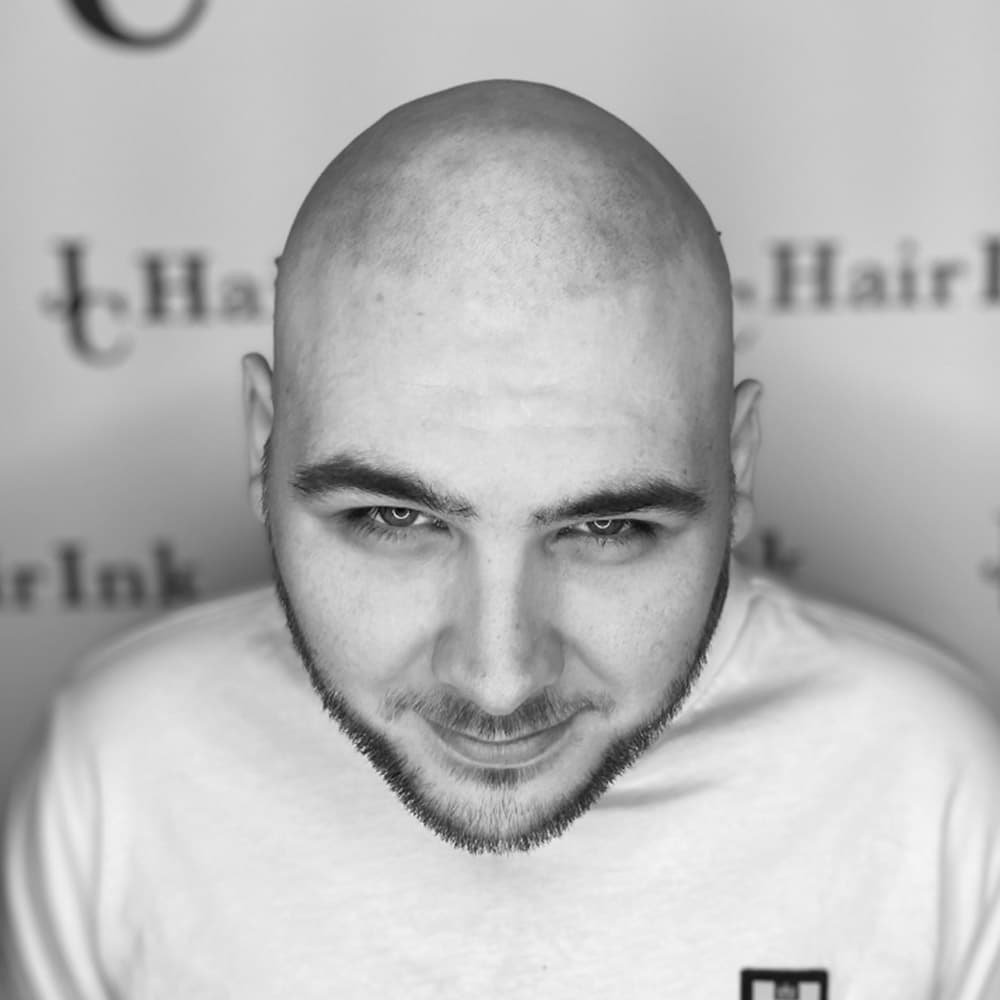
Scalp micropigmentation has become to ultimate hair loss solution. Fed up of wearing hats all the time to hide your receding hairline? Having to comb your hair over to hide low density areas of your scalp? Contact us today for a consultation